Authentic Asian Food Clipart: A Designer's Visual Guide
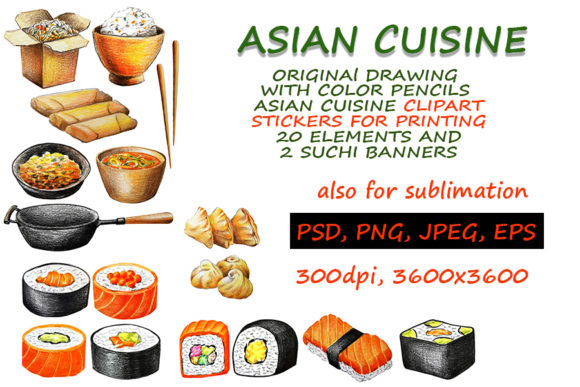
When you're building a brand that centers on Asian cuisine—whether it's a sushi bar, a Thai delivery service, or a food blog—the visual language you choose matters just as much as the menu itself. Generic stock imagery often falls flat, lacking the warmth and personality needed to connect with an audience that appreciates authenticity. This is where a dedicated set of Asian food clipart becomes an indispensable design asset. Unlike mass-produced graphics, this particular collection stands out because of its tactile, hand-drawn quality. Created entirely with color pencils, the illustrations offer a distinct "human touch" that digital vectors often miss. The strokes are deliberate, the textures are visible, and the colors feel organic. This style bridges the gap between professional polish and approachable charm, making it a versatile typeface for visual communication in the culinary space.
The Aesthetic Appeal of Hand-Drawn Culinary Art
The personality of this Asian cuisine clipart set is rooted in its medium. Color pencil illustrations evoke a sense of nostalgia and craft. In an era of AI-generated perfection, audiences crave authenticity. These illustrations don't just represent food; they represent the care and artistry that goes into cooking. The visual characteristics—soft edges, layered shading, and rich saturation—give the designs a premium feel without being pretentious. This style works exceptionally well for projects that aim to be warm, inviting, and slightly artisanal.
Because the elements are saved on transparent backgrounds at 300dpi and 3600x3600 pixels, they function as high-end design assets rather than simple decorations. You can scale them for large-format printing, such as wall decor or party banners, without losing the crispness of the pencil texture. For a brand strategist, this consistency is key. It allows you to maintain a cohesive visual identity across a tiny business card and a large window decal. The set includes not just food items like sushi and sashimi, but also banners, which helps in creating structured layouts for menus and promotional materials. This thoughtful packaging transforms the set from a random collection of images into a complete toolkit for brand identity development.
Strategic Applications: From Menu Design to Brand Identity
Understanding where to deploy these assets is just as important as having them. The versatility of this Asian food clipart allows it to shine across various mediums, influencing how your brand is perceived by potential customers.
Elevating Packaging and Print Design
For entrepreneurs running a sushi delivery service or a restaurant, packaging is the first physical touchpoint with the customer. Using these cliparts for sublimation printing on textiles, wrapping paper, or stickers creates a memorable unboxing experience. A handwritten font style like this pairs beautifully with clean, sans-serif typography. Imagine a matte black delivery box with a vivid, textured sashimi illustration and your logo in a modern, geometric sans-serif font. The contrast between the organic art and the clean type creates a sophisticated, modern aesthetic. This is a practical application of font pairing principles—balancing a decorative element (the art) with a functional element (the text) to ensure readability and hierarchy.
Digital Presence and Social Media Graphics
In the digital realm, engagement often hinges on visual stopping power. These illustrations are ideal for social media graphics where you need to stop a user from scrolling. The distinct style of the clipart helps in establishing a recognizable aesthetic on platforms like Instagram or Pinterest. For web design, these elements can break up long blocks of text in a blog post or add personality to a "About Us" page. However, a word of caution on readability: while the art is beautiful, it should support your content, not overshadow it. Use the clipart as spot illustrations or background accents, ensuring that your primary message—whether it's a menu item or a blog headline—remains the focal point.
Editorial and Commercial Publishing
For publishers and content creators focusing on cookbooks or lifestyle magazines, this set serves as a valuable premium font equivalent in the illustration world. It provides a consistent style throughout a publication. You can use the banners to create section headers or the individual food elements to illustrate recipes. Because the files are provided in multiple formats (PSD, EPS, JPEG, PNG), they integrate seamlessly into professional workflows, whether you are using Adobe InDesign for editorial design or Canva for quick social posts. This flexibility is crucial for maintaining efficiency in fast-paced production environments.
Practical Guidance for Implementation
Choosing the right design assets involves more than just liking the pictures. You need to evaluate the technical specifications and licensing to ensure they fit your project's scope.
- Evaluate Project Fit: Consider the tone of your project. The color pencil style is friendly and organic. If your brand is ultra-modern, minimalist, or high-tech, these illustrations might clash with your existing visual hierarchy. They work best for brands that value tradition, craftsmanship, or a playful, casual vibe.
- Technical Testing: Before committing to a large print run, test the assets. Place the PNG files into your design software and scale them to the intended size. Check how the pencil texture holds up. At 300dpi, they should perform well, but it is always good practice to proof your work.
- Commercial Licensing: The description notes that these are for commercial use, including logos and merchandise. This is a significant advantage. However, always read the fine print regarding resale of the digital files themselves. You are buying the right to use the art in your designs, not to sell the clipart files to others.
- Pairing with Typography: To maximize the impact of your logo design or menu, pair these illustrations with the right typeface. A clean sans-serif font works best for legibility against the detailed background of the art. Avoid overly decorative script fonts for body text, as they can become difficult to read when competing with the visual complexity of the clipart.
Ultimately, this collection of Asian cuisine clipart offers a practical solution for a specific niche. It solves the problem of finding high-quality, stylistically consistent art for food-related branding. By leveraging the unique texture of color pencil illustrations, designers and business owners can create materials that feel personal, authentic, and professionally crafted. Whether you are designing a menu for a new Thai restaurant or creating a series of postcards, these assets provide the foundation for a strong and engaging visual narrative.